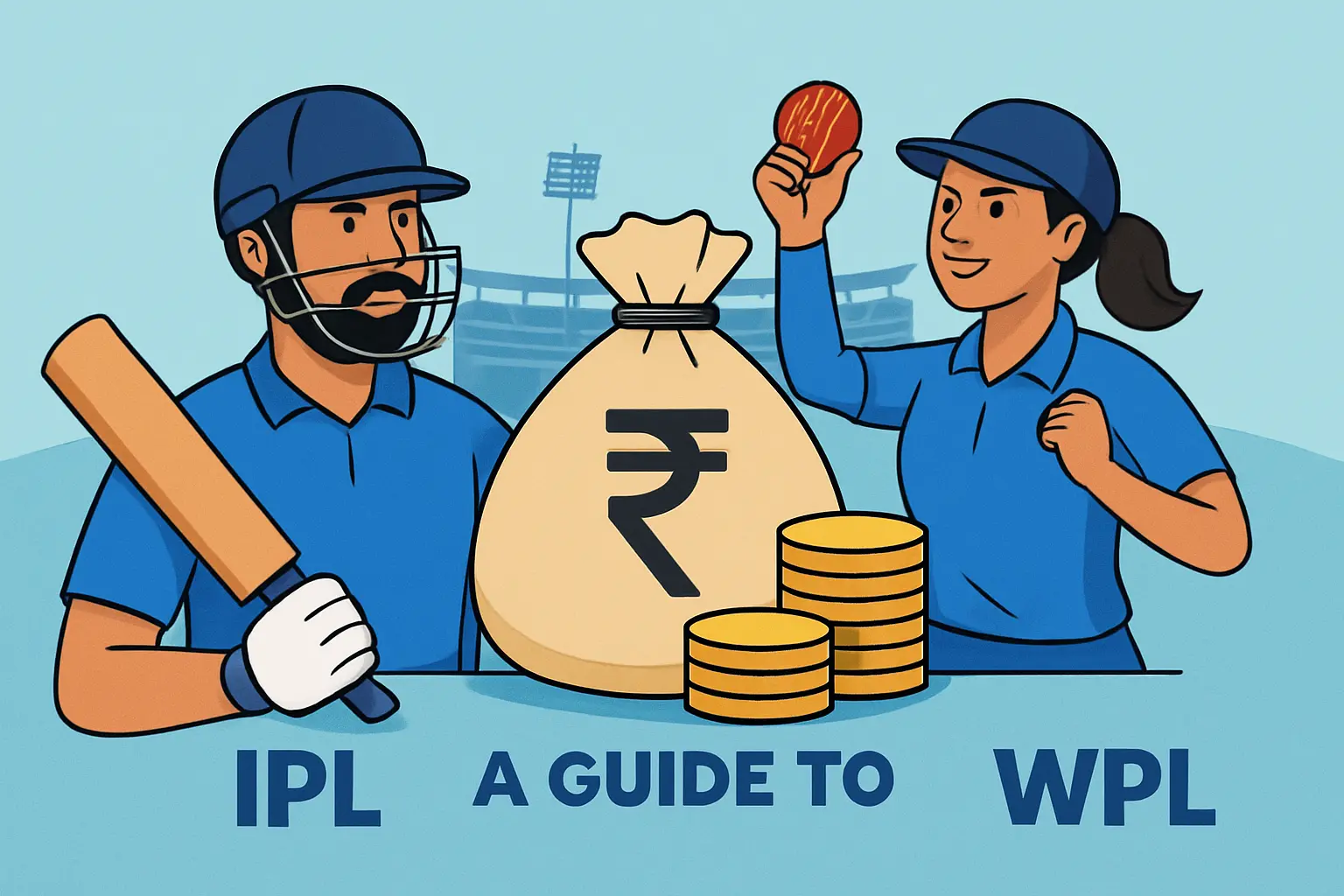
On the long bus rides between airport runways and stadiums, the little things tell you how Indian cricket really runs. The team manager at the front counting passports. The physio whispering to a fast bowler about hamstring loads. The senior batter at the back making sure a debutant knows where to pick up his kit allowance receipts. Money in Indian cricket rarely shows up on the scoreboard, yet it powers many of the choices players make: which formats to prioritise, how workloads are shared, when to rest, what risks are worth taking. This is the definitive, ground-level guide to the Indian cricket player salary system—how BCCI central contracts work, what cricketers get paid per Test/ODI/T20I, how IPL salaries compare, what domestic pros actually earn, how women’s contracts and the WPL fit in, and the allowances, bonuses, and small-print items that complete a player’s livelihood.
You’ll find the full pay stack here: retainers, match fees, bonuses, IPL and WPL salaries, domestic cricket pay, endorsements, tax, pensions, and even what umpires, coaches, and selectors make. The numbers are only part of the story. The context—who qualifies for which grade, how bench players are treated, how injuries are handled, what happens to daily allowances on tour—is what turns salary figures into a realistic picture of a cricketer’s year.
How Indian cricket player salary really works: the pay stack
Think of a player’s income as layers:
- BCCI central contract retainer: a fixed annual sum based on grade (A+ to C).
- International match fees: per-match payments for Tests, ODIs, and T20Is.
- Performance bonuses: series-win rewards, ICC event prize money shares, and ad-hoc BCCI bonuses.
- IPL salary: franchise fee for the season (retained or auctioned).
- Domestic cricket salary in India: Ranji Trophy, Vijay Hazare Trophy, Syed Mushtaq Ali fees; plus state retainers where applicable.
- Women’s contracts and WPL: BCCI women’s central contracts and Women’s Premier League salaries.
- Allowances and benefits: travel class, per diem, kit, insurance, injury compensation, medical rehab at NCA.
- Money beyond salaries: endorsements, appearance fees, social media, bat stickers, book/film rights.
- Pension and post-career: monthly pensions for retired internationals and domestic stalwarts; coaching gigs; commentary.
A rookie might only touch three or four of these layers. A three-format Indian star touches all of them. The mix can change from season to season—especially for those managing injuries or switching formats.
BCCI central contract salary: grades and meaning
The backbone of an India cricketer’s guaranteed income is the BCCI central contract. Four grades—A+, A, B, C—reflect the board’s view of a player’s current value to Indian cricket. Selection panels propose, the BCCI apex body signs off, and reviews happen annually. While debates about who should be where never end, the logic is fairly consistent.
- Grade A+: Reserved for three-format cornerstones. Think the captain, a generational pace spearhead, or a batter who picks himself across formats. This is the top retainer bracket.
- Grade A: Elite multi-format regulars or consistent first-choice players in two formats.
- Grade B: First-team squad players who feature reliably in at least one format, or are close to cementing multi-format roles.
- Grade C: Fringe internationals, specialists, and promising players who have broken in but aren’t yet established.
Fast bowling contracts exist in addition to central grades for a select pool of quicks; these recognise the unique workload risks of Indian fast bowling and often include support during NCA rehab stints and off-season work.
BCCI central contract retainer (indicative)
- A+: INR 7 crore
- A: INR 5 crore
- B: INR 3 crore
- C: INR 1 crore
Notes from inside the system:
- Movement between grades follows selection reality, not social media temperature. If a once-automatic pick becomes format-specific or misses long stretches through injury, grade recalibration happens.
- Captains and vice-captains don’t get “captain’s pay” as a separate add-on; responsibility is already priced into the grade they occupy.
- Retainer payments are instalment-based through the year, typically by quarter, and subject to standard tax deduction at source (TDS).
Indian cricketers salary per match: Tests, ODIs, T20Is
Beyond the retainer, per-match fees are the heartbeat of a player’s international income. The fee is the same within a format regardless of grade or seniority: a rookie and the captain earn the same match fee if they both make the playing XI.
Current per-match fees
- Test match fee: INR 15 lakh
- ODI match fee: INR 6 lakh
- T20I match fee: INR 3 lakh
Key points that matter in a player’s month:
- Playing XI rule: Match fees go to the playing XI. Squad members and travelling reserves do not receive match fees for that game; they receive per diem allowances and full travel/hotel coverage.
- Substitute wicketkeepers/fielders do not get a match fee unless they are listed in the XI.
- Match status: Abandoned matches after toss are typically payable; full cancellations may be handled differently as per BCCI guidelines.
- Equal pay for women’s internationals: India Women receive the same per-match fees as the men across formats. More on women’s contracts below.
Tour life and allowances
- Per diem: Players are paid a daily allowance on international tours and at home camps. On match and training days inside team hotels, most meals are covered by the BCCI; per diem covers incidental expenses and days where travel disrupts standard catering.
- Travel class and baggage: Business-class flights for internationals, generous excess baggage for kits, and hotel standards befitting elite sport are part of the deal.
- Kit and equipment: Players receive official apparel and equipment support; bat/gear sponsorships are private deals on top.
A realistic match-fee year
- A multi-format, fit player who features in, say, 8–10 Tests, 12–15 ODIs, and 10–15 T20Is can make well over a couple of crores purely from match fees, before counting the central retainer. A white-ball specialist naturally earns less in match fees but often balances that with IPL earnings and endorsements.
BCCI bonuses and performance incentives
- Series-win bonuses: The board has historically rewarded marquee series wins with lump-sum bonuses to the squad and support staff. These are discretionary but frequent for milestone moments.
- ICC event prize money: A share of prize money from ICC tournaments is typically distributed among players and support staff. The exact split is decided by the board for each event.
- Milestone appearance bonuses: Periodically, boards worldwide have used milestone bonuses (caps, runs, wickets) to incentivise longevity and excellence. India’s structure leans more on grade and match fee, with special one-off rewards for historic wins.
IPL salaries for Indian players: how the franchise money works
For many Indian cricketers—especially white-ball specialists—the IPL salary can be the largest single line item in a year. It operates under its own contract system independent of BCCI central contracts.
How an IPL salary is set
- Auction versus retention: Players either enter the public auction or are retained/traded by franchises. Retained players agree to a fee before the auction; auction players go to the highest bidder within the franchise purse limit.
- “Right to Match” and trades: Teams may use Right to Match cards in some auction formats to keep a bid at the final price. Trades can shift a player between teams at a mutually agreed fee.
- Salary cap and purse: Each franchise has a fixed purse for the squad. A player’s fee counts against this purse, not against a “per-match” budget.
Payment and guarantees
- Fixed season fee: A player’s IPL salary is the season fee, typically paid in instalments during the tournament window. Playing zero matches as a squad member does not reduce the fee.
- Availability and pro-rata: If a player withdraws for reasons outside injury/protected grounds, franchises can pro-rate the fee. If a player is injured on cricket duty, insurance and replacement rules apply; consult the standard player agreement (franchises, agents, and the BCCI’s IPL GC manage the fine print).
- Taxes: IPL fees are subject to TDS as professional income. Players handle advance tax and filings; many retain accountants familiar with athlete finances.
High-end Indian IPL salaries
- The top tier of Indian IPL earners has historically sat in the mid-to-high teens (in crores). Retained deals for marquee Indian captains, openers, and all-rounders frequently land north of ten crores. Auction spikes can happen for rising Indian specialists who solve a specific tactical need (powerplay wicket-taker, death bowler, finisher, or high-gear top-order batter).
Retained vs auction dynamics: a ground reality
- Certainty vs upside: Retained players often trade a fraction of potential auction upside for certainty and leadership role continuity. Auction entrants gamble for a bidding war, knowing the downside risk is a lower-than-expected price or unfavourable team fit.
- Tactical value trumps reputation: In recent windows, tactical roles—left-arm pace, off-spin powerplay overs, middle-overs enforcers—have commanded surprising premiums. Agents build player dossiers around these micro-skills.
IPL salary vs BCCI salary
- For a three-format A+ Indian cricketer, the central retainer plus international match fees add up to a formidable base. Yet for many single- or dual-format players, the IPL salary outstrips the BCCI component.
- Big picture for fans and players: The most stable earnings come from a blend—secure central retainer, consistent international match fees, and one marquee franchise deal.
Domestic cricket salaries in India: Ranji, Vijay Hazare, Syed Mushtaq Ali
If you want to understand Indian cricket’s depth, follow the money in domestic cricket. For thousands of professionals, state contracts and match fees are the career. The Ranji Trophy still pays, in more ways than one.
Match fees and experience slabs
- Ranji Trophy: Players in the playing XI earn match fees set by BCCI, calculated on a per-day basis for the four-day format. The final per-match payout typically lands in the range of a lakh-plus for regulars, higher for those in the top experience slab. Seniors with significant first-class matches under their belt earn more per day than rookies.
- Vijay Hazare Trophy: One-day domestic match fees are lower than Ranji per-day rates but substantial, again with experience-based slabs.
- Syed Mushtaq Ali Trophy: T20 domestic match fees are the lowest within senior men’s domestic but add up across a full campaign and playoffs.
Allowances and logistics
- Per diem and travel: BCCI/state associations cover economy or business travel based on policies, ground transfers, hotel, meals, and daily allowances. For outstation players on state retainers, housing support may be offered during the domestic season.
- State retainers: Several state associations pay annual retainers to contracted players—tiered by seniority and role. These can meaningfully top up a domestic pro’s yearly income.
- Tournament bonuses: State associations sometimes award bonuses for winning the Ranji Trophy or white-ball tournaments, especially for historic titles.
Pathway money: Duleep, Deodhar, Irani
- Players picked for zonal or BCCI invitational tournaments (Duleep Trophy, Deodhar Trophy, Irani Cup) receive per-day match fees higher than standard domestic fixtures. These acts as both recognition and incentive.
The silent engine of Indian cricket earnings
- Consider a domestic pro who plays most Ranji matches, features in Vijay Hazare and SMAT, and holds a state retainer. Add a couple of zonal fixtures. That season’s income is robust and, for top-tier domestic players, competitive with entry-level IPL fees—especially when combined with a small brand deal or a coaching stint in the off-season.
Indian women cricketer salary: contracts, equal match fees, and the WPL effect
The women’s game has a clear, professional pay structure in India today.
BCCI women’s central contracts
- Grade A: INR 50 lakh
- Grade B: INR 30 lakh
- Grade C: INR 10 lakh
Equal match fees across formats
- Test match fee: INR 15 lakh
- ODI match fee: INR 6 lakh
- T20I match fee: INR 3 lakh
The effect of equal match fees is transformative. A contracted India Women player who features regularly in bilateral and ICC-event cricket can now draw international match-fee income at the same levels as a men’s international, on top of her retainer—plus WPL.
Women’s Premier League salaries
- Team purse and bidding: Franchises operate within a set team purse, sign players at auction or retention, and pay a fixed season fee (instalments during the tournament).
- Top WPL Indian contracts: India’s marquee women—high-impact openers, seam-bowling all-rounders, and wrist-spinners—sit at the upper end of the WPL salary bracket, measured in crores rather than lakhs. Even mid-tier Indian talent now sees six- and seven-figure fees in rupees, a leap from the pre-WPL era.
What WPL changed
- Financial runway: Indian women cricketers can plan careers with a predictable income floor—central contract + equal match fees—while the WPL provides a powerful upside.
- Ecosystem spillover: Domestic women’s cricket benefits from improved scouting, better facilities, and coaching pathways tied to franchise ecosystems.
Allowances, bonuses, and the fine print
Travel and per diem
- International and domestic tours include per diem allowances. On team hotel days, meals are arranged; on transit days or rest days, per diem covers incidentals.
- Medical and rehab: The NCA in Bengaluru functions as a world-class rehab hub. Central and fast-bowling contracted players are covered for treatment and receive support while unavailable.
Injury compensation
- International duties: Injuries on national duty are supported by BCCI medical and insurance systems; payment protection depends on contract clauses and BCCI policy.
- Domestic compensation: BCCI has offered compensation mechanisms for domestic players missing tournaments due to call-ups or unforeseen disruptions. The intent is to protect livelihood during absence from a key earning window.
Prize money distribution
- ICC events: India’s share of ICC prize money is distributed among squad and support staff using a board-defined formula. Big wins often attract additional BCCI bonuses.
- Bilateral series: There’s no fixed “bonus” slab, but landmark victories have historically been rewarded.
Pensions
- BCCI pensions support retired India internationals and senior domestic cricketers, as well as match officials. Payouts are tiered by number of matches/years of service. It’s a quiet, important commitment: many domestic stalwarts rely on these stipends.
For the elite tier of Indian cricketers, endorsements dwarf cricket salaries. For the rank-and-file, even a couple of regional brand deals move the needle.
What brand money looks like
- National endorsements: Banking, telecom, auto, beverages, fantasy sports, crypto-curious tech, and e-commerce drive the market. Top Indian cricketers command multi-crore, multi-year deals, with appearance days carefully scheduled around BCCI/NCA windows.
- Bat and kit sponsors: Bat manufacturer deals pay in cash and willow supply. Sticker rights are prime real estate; power hitters with TV time command premium rates.
- Social media: Paid posts and platform collaborations offer steady side income. Teams increasingly set guardrails to avoid conflicts with official partners.
- Appearance fees: School launches, corporate meets, academies. For mid-tier players, these can rival domestic season income.
Tax on cricket income in India
- Match fees, retainers, and IPL/WPL salaries: Taxed as professional income. TDS is deducted at source by BCCI/franchises. Players pay advance tax and file returns at applicable slabs; surcharges may apply to high-income brackets.
- Endorsements: Often invoiced through a personal services entity; GST may be applicable; deductions can be claimed for agent fees, travel, and professional expenses.
- Overseas income and DTAA: Payments from foreign leagues or appearances can trigger double-taxation considerations; leading players retain specialist advisors.
Salary comparisons and context: India vs the world, IPL vs international, domestic vs IPL
Global comparison
- On retainers and match fees, India sits at or near the top of international cricket. England and Australia also pay strong central retainers and per-match fees, but India’s scale—backed by broadcasting and sponsorship—keeps BCCI at the front. The equal match-fee policy for women further vaults India into global leadership on pay parity.
IPL vs international
- For a three-format Indian star, the BCCI retainer plus match fees form a reliable, high floor. For specialists and emerging talents, IPL can be the single largest cheque of the year. The best long-term career strategy most agents advise is not “either/or” but “solve for both”—secure your national role while maximising franchise windows responsibly.
Domestic vs IPL
- A top domestic cricketer who does not currently feature in the IPL can still make a comfortable living through match fees, state retainers, and off-season coaching. But the delta is real: an IPL deal—even at mid-tier prices—can double or triple a domestic-only income in a single season. This is why Syed Mushtaq Ali roles (death overs with the ball, powerplay-hitting with the bat) become career-altering specialties.
Role-based pay around the team: coaches, selectors, umpires, referees
Indian cricket coach salary
- Head coach: A multi-crore annual package plus performance incentives and travel perks. Assistants (batting, bowling, fielding) earn in the high lakhs to low crores range.
- Support staff: Physios, trainers, analysts, and throwdown specialists draw strong professional salaries, with NCA roles providing stability year-round.
BCCI selectors
- National selectors receive annual remuneration commensurate with the seniority of the panel and workload, including domestic travel across tournaments. The chief selector earns a premium over panel members.
Umpires and referees
- ICC elite Indian umpires earn ICC retainers and per-match fees in international assignments; BCCI domestic umpires are paid per match (first-class rates > List A > T20), with travel and allowances. Match referees receive per-match fees; seniority and panel level influence the scale.
Player-specific salary snapshots: how the money typically breaks down
Virat Kohli salary (structure)
- BCCI: Among the top grades, ensuring the highest retainer bracket. Adds match fees across formats when selected.
- IPL: A premium retained deal with his long-term franchise.
- Endorsements: One of India’s most marketable athletes; brand income routinely outstrips cricket salaries.
- Extras: Appearance fees, personal brands/ventures, and bat deal.
Rohit Sharma salary (structure)
- BCCI: Top grade retainer. Regular match fees as a multi-format leader.
- IPL: Premium captaincy/retained band through the years.
- Endorsements: Big-ticket campaigns and prime TV visibility.
Jasprit Bumrah salary (structure)
- BCCI: Top grade, often with fast-bowling contract support given workload.
- IPL: High-end franchise deal reflecting elite T20 value.
- Extras: Select premium endorsements, often performance-aligned (sports gear, beverages).
Ravindra Jadeja salary (structure)
- BCCI: Elite grade courtesy of multi-format impact.
- IPL: One of the most valuable T20 all-rounders; premium franchise band.
- Endorsements: Fast-moving consumer goods and sportswear; high utility on TV.
KL Rahul salary (structure)
- BCCI: High-grade retainer reflecting multi-format middle-order and leadership roles when fit.
- IPL: Among the top Indian franchise earners in recent cycles.
- Endorsements: Consumer tech, sports brands.
Suryakumar Yadav salary (structure)
- BCCI: White-ball specialist with strong central grade.
- IPL: Key T20 asset; long-standing franchise value.
- Endorsements: Growing roster, especially in digital-first categories.
Shubman Gill salary (structure)
- BCCI: Elevated grade as a multi-format top-order mainstay.
- IPL: Core retained player with leadership potential and long runway.
- Endorsements: Youth demographic magnet; bat sticker value rising.
Rishabh Pant salary (structure)
- BCCI: High grade; when in rehab, support via NCA and contract protections.
- IPL: Central figure for franchise brand and lineup.
- Endorsements: Big-city fanbase, wicketkeeper-batter appeal.
Hardik Pandya salary (structure)
- BCCI: White-ball-heavy central grade; fitness management is central to workload planning.
- IPL: Premium all-rounder fee with leadership add-ons.
- Endorsements: Lifestyle and youth brands.
Mohammed Shami salary (structure)
- BCCI: High grade based on Test and ODI impact.
- IPL: Consistently strong auction/retained value for powerplay and seam movement.
- Endorsements: Sports gear, socially trusted categories.
Legacy interest
- MS Dhoni salary: No longer a centrally contracted India cricketer; IPL fee remains a headline number for a franchise icon. Endorsements and business ventures remain substantial.
- Sachin Tendulkar earnings: Historically set the template for cricket brand economics in India—bat deals, TV adverts, and long-tail equity in brands.
Rising names
- Yashasvi Jaiswal salary: Central contract grade reflecting India role + IPL deal that accelerated post-breakout season.
- Rinku Singh salary: White-ball specialist profile translating to meaningful IPL valuation; central contract as limited-overs option.
- Arshdeep Singh salary: Left-arm pace scarcity value in T20 + centrally contracted limited-overs role.
Indian cricketers’ salary per match and retainers: quick reference tables
BCCI central contract retainers
- Grade A+: INR 7 crore
- Grade A: INR 5 crore
- Grade B: INR 3 crore
- Grade C: INR 1 crore
International match fees (men and women; equal match fees policy)
- Test: INR 15 lakh per match
- ODI: INR 6 lakh per match
- T20I: INR 3 lakh per match
BCCI women’s central contracts
- Grade A: INR 50 lakh
- Grade B: INR 30 lakh
- Grade C: INR 10 lakh
Domestic cricket match fees (indicative structure)
- Ranji Trophy: Per-day rates with experience slabs; playing XI totals commonly exceed a lakh per match, higher for seniors.
- Vijay Hazare Trophy: Lower than Ranji per-day but meaningful across a full campaign.
- Syed Mushtaq Ali Trophy: Lowest of the three, still material over a full season.
IPL vs BCCI: which is higher for Indian players?
- Guaranteed annual: A+ retainer + match fees can rival a mid-tier IPL deal.
- Ceiling: Elite IPL contracts can exceed a player’s BCCI earnings in a given season, particularly for single-format stars.
- Stability: Central contract + match fees provide income stability even through injury layoffs, with NCA rehab and support baked in.
How BCCI central contracts are decided and reviewed
Criteria that actually matter
- Formats played: Automatic picks across formats gravitate to A+; two-format regulars to A; one-format specialists and fringe to B/C.
- Availability and fitness: Long injury breaks or disciplined format breaks may reduce grade; exemplary fitness and consistent availability push a player up.
- Impact, not just appearances: Match-winning impact and leadership influence grade movement.
- Discipline and team culture: Off-field conduct and professionalism are monitored; serious breaches can affect contract renewal.
Timeline and communication
- Selection committee and team management discuss likely grades based on the latest cycle’s performances and plans. The BCCI SGM ratifies. Players are notified; agents/planners recalibrate endorsement calendars, taking into account shoot windows around national camps and the IPL.
Do bench players get paid in international cricket and IPL?
International
- Match fees: Only the playing XI receive the match fee.
- Per diem/allowances: Squad members and reserves receive per diem and full travel/hotel coverage.
- Retainer: Central contract retainer continues irrespective of playing XI status.
IPL/WPL
- Season fee: Paid regardless of matches played.
- Non-availability: Voluntary withdrawal can lead to pro-rata reductions; injuries on duty are treated under contract insurance provisions.
Ranji Trophy salary per match: how it really lands in a player’s account
- Match fee structure: Calculated per day, with a higher slab for experienced cricketers. A four-day game for a senior pro typically pays more than a lakh in match fees alone. This excludes per diem, travel, and potential state bonuses.
- Bench and squad: Non-playing members earn a lower fee or daily allowance depending on state policy. Being in the squad still has value: it secures state retainer tiers and keeps a player visible to selectors.
- Playoffs and finals: Additional prize money from state associations can sweeten the pot.
Endorsement market: who earns the most and why
- Highest paid Indian cricketer overall: On pure cricket salary, A+ grade players lead the BCCI side, and top IPL Indians headline franchise pay. Overall income is usually led by Virat Kohli because of endorsements; Rohit Sharma, MS Dhoni, and Hardik Pandya also command enormous brand portfolios. The delta comes from off-field earnings where fan affinity, performance narrative, and digital footprint combine.
- Role of social media: Brands buy reach and trust. Cricketers with strong engagement-to-follower ratios, clean reputations, and family-friendly personas bake premium into each deal.
- Seasonality: Endorsement shoots are wedged between tours and IPL. During long home seasons, brands book hotel studio days in team cities; overseas tours usually push shoots to off-days with tight windows or defer them to home returns.
Taxes and compliance: the checklist cricketers actually use
- TDS: Expect deduction at source on BCCI/IPL payments.
- Advance tax: Quarterly advance tax to avoid interest.
- Professional deductions: Agent commissions, travel for brand shoots, housekeeping for memorabilia, and home-office expenses can be claimed with proper documentation.
- GST: Applicable on endorsement services; many players operate through a private limited or LLP.
- Foreign receipts: Keep DTAA paperwork ready for overseas endorsements or prize money; agents and accountants coordinate certificates of residency to avoid double taxation.
Comparisons Indian fans often ask about
- India vs England/Australia cricketer salary comparison: India’s central retainer and match fees are world-leading; the IPL provides a unique franchise upside. English and Australian pros rely heavily on central retainers plus The Hundred/BBL/T20 leagues; their domestic retainers are stronger than most boards, but Indian players’ IPL access changes the calculus decisively.
- Is IPL salary included in BCCI contract? No. IPL/WPL salaries are separate franchise agreements. BCCI central contract and match fees are independent.
- Are Indian match fees the same for captains? Yes. Captains do not receive a separate captain’s match fee. Leadership influence is reflected in grade selection and endorsements.
- What about taxes on prize money? Prize money is taxable income. Distribution to players/support staff is treated as income in their hands.
Building a realistic annual earning picture: three examples
1) Three-format A+ player
- BCCI retainer at top grade.
- Test, ODI, T20I match fees across a full calendar—double-digit crores possible over multiple seasons when you combine retainer and match fees.
- IPL premium retained fee.
- Endorsements that can exceed on-field earnings.
- Bonuses from major tournament wins, plus per diem, travel, and kit allowances.
- Tax planning essential; diverse income streams.
2) White-ball specialist with limited Tests
- BCCI retainer at A/B.
- Heavy ODI and T20I match fees.
- A strong IPL deal often outstrips on-field BCCI income.
- Endorsements rising with TV time and winning moments.
- Domestic appearances limited due to national/league workloads.
3) Domestic stalwart without IPL
- State retainer.
- Ranji + Vijay Hazare + SMAT match fees. Add Duleep/Irani appearances if selected.
- Coaching camps in the off-season; fitness bootcamps; academy tie-ups.
- Endorsements at regional level: sports shop, fitness chain, local automobile dealer.
- Stable, respectable annual income with lower volatility than IPL-dependent paths.
A practical explainer: A+ A B C grade meaning in one glance
- A+: Cornerstone of India’s multi-format plans; top retainer.
- A: First-XI regular in two formats or more; high retainer.
- B: Solid first-team presence in at least one format; mid retainer.
- C: Emerging/fringe international; entry retainer.
- Fast-bowling contract: Supplemental support and recognition for quicks with national roles.
Officials and support staff: the other professionals on the field
- Match referees: Paid per match; top-tier referees handling internationals and IPL matches earn at the upper end with travel covered.
- Umpires: Domestic and international panels with tiered fees; the best Indian umpires balance ICC assignments with BCCI competitions.
- Strength and conditioning coaches, physios, analysts: Packages reflect elite sport standards; continuity at the NCA signals career reliability.
- India’s cricket ecosystem has become a full-employment machine for niche experts—throwdown specialists, side-arm experts, spin whisperers, and even sleep consultants on long tours.
FAQs: short, sharp answers to the most searched questions
- Who is the highest paid Indian cricketer?
On guaranteed cricket salary, top-grade BCCI players lead the retainer list, and the highest Indian IPL earner sits near the top of franchise pay. Overall, Virat Kohli typically ranks first when endorsements are included. - How much do Indian cricketers earn per Test/ODI/T20?
Test: INR 15 lakh; ODI: INR 6 lakh; T20I: INR 3 lakh per match for the playing XI. - What are BCCI contract grades?
Four main grades—A+, A, B, C—with retainers of approximately 7, 5, 3, and 1 crore respectively. A+ is for three-format cornerstones; A for multi-format regulars; B for established single-format or fringe multi-format players; C for emerging or specialist selections. - Do Indian cricketers get pension?
Yes. BCCI runs pension schemes for retired internationals, senior domestic pros, and match officials, tiered by appearances/service. - What is the Ranji Trophy per match fee?
It’s calculated per day with experience slabs. Playing XI pros typically earn over a lakh per match, with seniors in the top slab earning more. - Do Indian women cricketers have central contracts?
Yes. Grade A (50 lakh), Grade B (30 lakh), Grade C (10 lakh). Women receive equal match fees as the men for internationals: Test 15 lakh, ODI 6 lakh, T20I 3 lakh. - Is IPL salary included in the BCCI contract?
No. IPL salaries are separate franchise payments. BCCI retainers and international match fees are independent. - Do bench players get paid in international cricket/IPL?
International: Only the playing XI gets the match fee; squad members get per diem and travel/hotel coverage. IPL/WPL: The season fee is paid regardless of matches played; pro-rata reductions can apply if a player withdraws for non-protected reasons. - How much do Indian umpires and referees earn?
Per-match fees vary by panel and tournament. ICC elite assignments pay international-scale retainers and fees; BCCI domestic rates are tiered by format and seniority. - What daily allowances do Indian cricketers get?
Players receive per diem allowances on tour and domestic duty to cover incidentals. Meals and lodging are largely covered through team arrangements.
What changes when a player gets injured or goes to the NCA?
Central contracts protect the player’s base income (retainer). Match fees stop if the player isn’t in the XI, but IPL/WPL contracts, BCCI medical support, and insurance help. At the NCA, rehab is full-service: scans, specialists, phased workload returns, and match-simulation nets. For bowlers, the fast-bowling contract pool recognises the unique physical costs of the job with extra assistance.
Inside the dressing room: how salary shapes strategy
- Format prioritisation: When a batter’s white-ball technique unlocks IPL millions, the temptation to shade preparation toward T20 is real. The best pros ring-fence Test skills because the BCCI retainer + Test fees + legacy value are irreplaceable—not to mention selection weight. Good agents balance this triangle: Test status, IPL value, brand persona.
- Rest-and-rotation debates: Fans grumble when stars are “rested,” but match fees and central contracts work best with sustainable workloads. The NCA’s periodisation models, plus incentives like ICC bonuses and long-term IPL value, push teams toward smarter rest windows.
- Leadership calculus: Captains don’t get extra match fees, but they do benefit in the market. Brands pay for narrative and visibility; leading India is the narrative of a lifetime.
IPL and India schedule: the calendar math that impacts money
- Windows and overlaps: When IPL windows align cleanly, Indian internationals get a clear run at both. If tours crowd the edges, national duty takes precedence. Contractually and culturally, India caps trump franchise requests.
- White-ball specialists and anchor roles: A finisher who doesn’t feature in Tests stacks earnings in April-May (IPL) and international T20/ODI windows; their agents target endorsement shoots right after the IPL when visibility peaks.
Domestic reality check: the economics of breaking through
- The climb: Youngsters start with state contracts and match fees. A strong Syed Mushtaq Ali season can trigger IPL trials. Ranji performance still matters to India selection more than franchise numbers.
- The floor: Even without IPL, a contracted domestic player can assemble a steady six-to-seven figure rupee income across a full season with state retainer + match fees + per diem + coaching camps.
- The spike: An IPL pick can double that floor overnight—and unlock national doors.
Nerdy but useful: difference between a BCCI retainer and a match fee
- Retainer: Paid in instalments through the year. It’s your base salary for being part of the BCCI’s contracted pool, independent of how many matches you play.
- Match fee: Paid whenever you make the playing XI. It’s performance-adjusted income in the sense that selection, form, and fitness directly decide it.
Yes, players receive a share when India earns prize money at ICC events. The distribution is communicated by the board and generally includes the squad and support staff. Spikes—such as a global title—often coincide with additional BCCI bonuses. These are public gestures that also resonate privately: players and staff remember who gets recognised.
State association contracts: the quiet differentiator
Not all state associations pay the same retainers, but many now offer structured annual deals with tiers (elite, senior, developmental). Add wellness support, physiotherapy tie-ups, and off-season fitness allowances and you can see why some domestic professionals choose stability with a particular state even when transfer offers arise.
Bench strength economics: why “reserves” are worth it
- Internationally, reserves don’t get match fees. But their presence compresses injury risk for the team and earns them proximity to the NCA staff, net bowlers, and leadership. The intangible value converts later—central contract upgrades, brand familiarity, and smoother IPL roles.
- In the IPL, bench players are paid their season fee. Franchises use analytics to monetise the bench: if a death bowler suddenly breaks down mid-season, the number three bench seamer might become the highest ROI decision of the campaign.
Indian cricket player salary in rupees vs dollars: do conversions matter?
Not for the people getting paid. Players plan around rupees earned and rupees spent. Currency conversions matter only for overseas appearances, county stints, or endorsements; most Indian pros are rupee-native in both planning and taxation.
The long game: pensions, second careers, and financial literacy
- Pensions and gratitude: The BCCI pension is more than nostalgia; it’s a real plan that eases career transitions. Senior domestic players depend on it after decades of travel and grind with minimal endorsements.
- Coaching and commentary: Players with strong cricket IQ transition seamlessly into support roles, academies, or broadcast. These incomes can outlast playing careers by decades.
- Financial literacy: The smarter pros run budgets like small businesses—separate bank accounts for TDS receipts, quarterly tax calendars, insurance audits, and clear rules for family and foundation expenses. The days of leaving it all to a cousin are gone.
Indian cricket coach salary, selector salary, umpire salary India: broad brackets
- Head coach: Multi-crore annual contract with performance-linked bonuses, five-star travel, and staff hiring input.
- Assistant coaches: Lakhs to low crores per year; IPL roles can be more lucrative than some national assistant positions depending on experience.
- Selectors: Lakh-level monthly-equivalent packages that aggregate to a solid annual figure; travel covered.
- Umpires and referees: Daily/per-match fees vary by panel and assignment. An elite umpire with ICC assignments plus domestic finals works a genuinely professional calendar.
A note on accuracy, updates, and what changes
BCCI periodically reviews central contract lists, match fees, domestic pay slabs, and allowances. IPL/WPL auction dynamics shift with team strategy and purse. Women’s contracts and equal match fees are now settled fundamentals. Domestic slabs can see incremental bumps. Endorsement markets move with performance and public mood.
The underlying architecture, though, is stable:
- Central retainer + match fees
- IPL/WPL season fee
- Domestic pay with experience slabs
- Allowances, insurance, and pensions
- Endorsements and tax
If you remember this structure, you can read any headline—“X retained at Y crores,” “BCCI announces contract list,” “Record IPL bid”—and instantly place it in context.
Closing thoughts: why this matters beyond gossip and numbers
Indian cricket salaries are not just trivia for the off-season. They tell you how the sport values formats, roles, and risk. They explain selection calls that might otherwise look puzzling. They reveal why a batter spends an extra hour honing red-ball leaving drills before a white-ball series: the long arc of a Test career supports both pride and pay. They show how a left-arm seamer invests in a powerplay inswinger because IPL premiums reward it. They highlight why equal match fees for women are more than symbolism—they change how a young girl and her family calculate a future in cricket.
Most of all, they sketch the modern Indian cricketer as a professional with a portfolio. Retainer. Match fees. IPL. Domestic. WPL. Allowances. Insurance. Endorsements. Pension. It’s a lot to manage, and the best do it with the same discipline they bring to practice sessions. You don’t have to see the spreadsheets to appreciate the craft. Watch the set batter turn down a risky single late in the day of a Test, protecting his wicket. There’s a salary table somewhere that nods in approval—but really, it’s about legacy, and the money follows. That’s the Indian game in full: heart first, numbers precise, and a structure robust enough to reward both.

Zahir, the prolific author behind the cricket match predictions blog on our article site, is a seasoned cricket enthusiast and a seasoned sports analyst with an unwavering passion for the game. With a deep understanding of cricketing statistics, player dynamics, and match strategies, Zahir has honed his expertise over years of following the sport closely.
His insightful articles are not only a testament to his knowledge but also a valuable resource for cricket fans and bettors seeking informed predictions and analysis. Zahir’s commitment to delivering accurate forecasts and engaging content makes him an indispensable contributor to our platform, keeping readers well informed and entertained throughout the cricketing season.