Last updated: recently
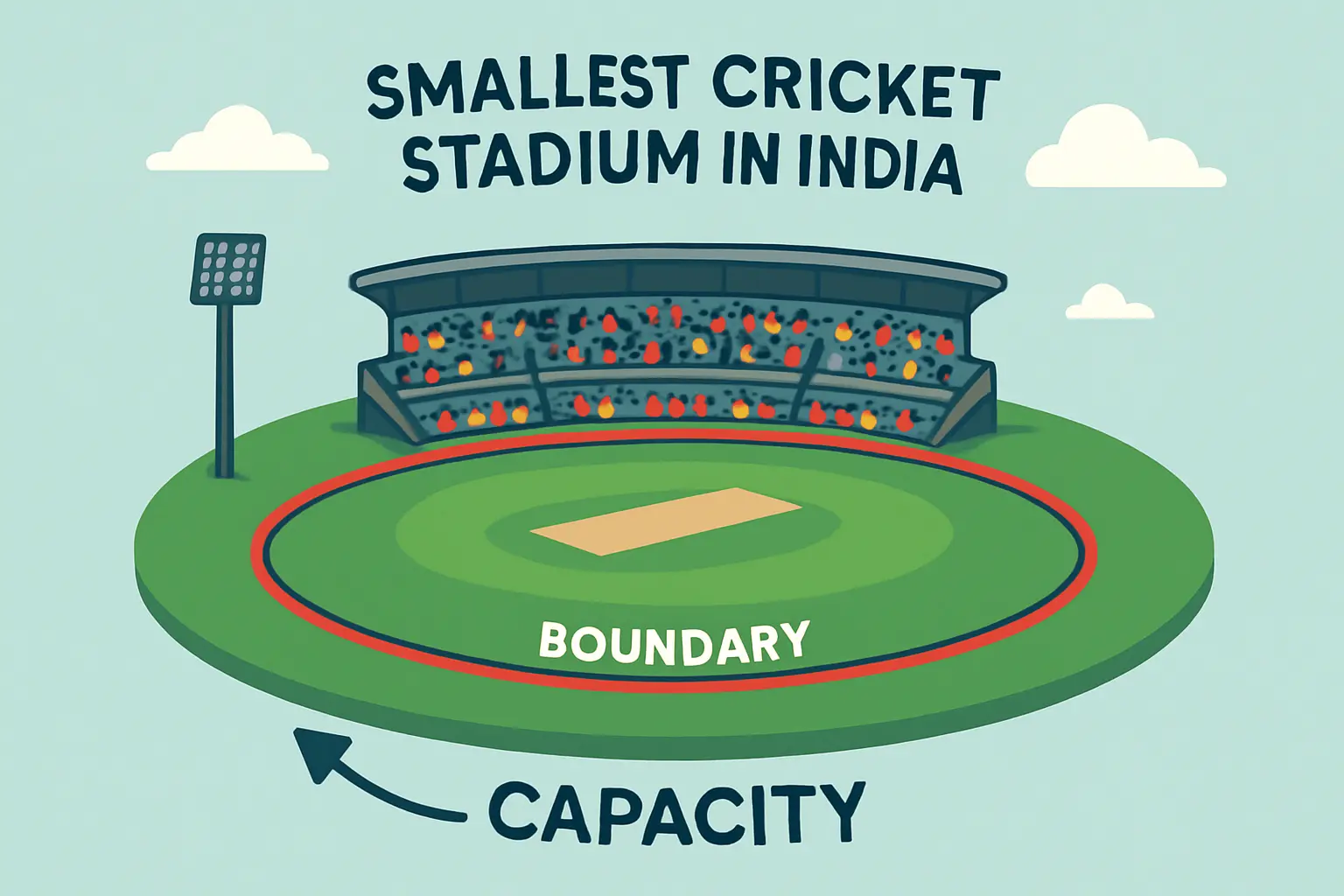
The phrase “smallest cricket stadium in India” sounds simple until you begin to peel back the layers. Smallest by what? By the number of seats in the stands? By how far the boundary rope is from the middle? By how it plays in a T20, an ODI, or a Test? The answer changes depending on what you value. And in the era of rope movements, temporary seats, and televised events that change sightlines, boundary sizes can shift even within the same venue across two matches in a week.
This deep dive separates the question into what actually matters: the smallest by seating capacity, and the smallest by boundary size — and within boundaries, by straight vs square, and by format context (especially the IPL, where rope placement is often as tight as regulations allow). It blends hard facts with cricket’s tactile reality: ground staff decisions, prevailing winds, altitude, and tactics that batters and captains carry in their back pocket.
Quick answer: capacity vs boundary, and why it matters
- By seating capacity among active international venues, HPCA Stadium in Dharamshala is widely regarded as the smallest in India, with a capacity generally cited around the low twenties of thousands. A few venues in a similar range exist or have hosted internationals sporadically, but Dharamshala remains the most prominent and frequently used of the truly small-capacity stadiums.
- By boundary size, India’s shortest and most “batting‑friendly” grounds tend to be M. Chinnaswamy Stadium (Bengaluru) and Holkar Stadium (Indore), with Wankhede (Mumbai) and Arun Jaitley Stadium/Kotla (Delhi) often not far behind depending on rope placement. IPL matches can see shorter effective boundaries than internationals because organizers bring ropes in for safety lanes, ad boards, camera pits, or event operations — still within ICC rules.
- ICC’s boundary rule of thumb: the boundary must not be less than 59.43 meters (65 yards) from the center of the pitch, and not more than 82.29 meters (90 yards) where practicable. This is why you seldom see anything truly tiny in internationals. In the IPL, boundaries often sit near the minimum, especially square. So “smallest cricket ground in India” is really a story about optimization within a legal framework.
Smallest cricket stadium in India by capacity
Capacity is simpler than boundary — at least on paper. It’s printed on stadium websites, stadium boards, or in board documentation. Yet even capacities flex a little over time due to new lounges, improved aisles, reconfigured seating blocks, and safety audits. The figures below reflect commonly accepted, recent numbers. Think of them as best-current estimates rather than eternally frozen fact.
Key takeaways about capacity:
- Dharamshala (HPCA) is the smallest among the active, marquee international venues.
- Some smaller grounds exist or have hosted internationals intermittently, but either aren’t used regularly or underwent changes that shifted their capacity.
- Several mid-sized Indian venues hover in the 25,000–35,000 window. What distinguishes the smallest clubs in that pack is their location, design, and how often they host big fixtures.
Table — Smallest cricket stadiums in India by seating capacity (active/useful context)
| Stadium | Approx capacity | Formats hosted | Renovation note |
|---|---|---|---|
| HPCA Stadium (Dharamshala, Himachal Pradesh) | ~23,000 | Test, ODI, T20I, IPL | Mountain venue with occasional upgrades; seating segmentation emphasizes sightlines amid steep banks. |
| Nahar Singh Stadium (Faridabad, Haryana) | ~25,000 | Limited internationals historically; domestic | Use at top level has been limited in recent seasons; facility refurbishments have been on and off. |
| PCA IS Bindra Stadium (Mohali, Punjab) | ~26,000–27,000 | Test, ODI, T20I, IPL | Multiple improvements over time with focus on hospitality zones and media facilities. |
| ACA‑VDCA Stadium (Visakhapatnam, Andhra Pradesh) | ~27,000 | Test, ODI, T20I, IPL | Outfield and spectator amenities upgraded periodically; a reliable mid-small international venue. |
| Saurashtra Cricket Association Stadium (Rajkot, Gujarat) | ~28,000 | Test, ODI, T20I, IPL | Modern bowl structure, good practice facilities. |
| Sawai Mansingh Stadium (Jaipur, Rajasthan) | ~30,000–32,000 | ODI, T20I, IPL | Hospitality and training infrastructure updated; stands still retain a classic footprint. |
| Holkar Stadium (Indore, Madhya Pradesh) | ~30,000 | Test, ODI, T20I, IPL (select seasons) | One of the more compact international-ready grounds; small dimensions, vibrant stands. |
| Green Park Stadium (Kanpur, Uttar Pradesh) | ~32,000 | Test, ODI, T20I | An old-school venue with phased upgrades; capacity varies by configuration and safety mapping. |
| Wankhede Stadium (Mumbai, Maharashtra) | ~33,000–33,500 | Test, ODI, T20I, IPL | Major modernization for hospitality boxes and sightlines, with the boundary rope often adjusted for event requirements. |
| M. Chinnaswamy Stadium (Bengaluru, Karnataka) | ~35,000 | Test, ODI, T20I, IPL | Noted for eco-friendly initiatives; spectator comfort tweaks keep the capacity stable. |
| Arun Jaitley Stadium, formerly Feroz Shah Kotla (Delhi) | ~41,000–42,000 | Test, ODI, T20I, IPL | After safety upgrades and reconfigured stands, the current capacity is mid-to-large, but boundaries can play short square. |
| Barsapara Cricket Stadium (Guwahati, Assam) | ~38,000–40,000 | ODI, T20I, IPL | Newer bowl with event-friendly apron space, often used for high-profile T20s. |
Note on comparators:
- Among actively used international venues, Dharamshala’s figure is the standout for “smallest cricket stadium in India by capacity.”
- Nahar Singh registers a low number but has had sporadic top-tier activity.
- Mohali, Vizag, Rajkot, and Indore form a tier of relatively small-to-mid-sized venues that host internationals and IPL with regularity.
Smallest cricket stadium in India by boundary size
Here is where the debate heats up. Boundary size is elastic. Two matches at the same ground, with ropes set different by a matter of meters, can change everything: from the expected total to a batter’s preferred scoring zones. For T20 in particular, event managers might pull the ropes in close to the minimum lawful distance — especially on the square boundaries — to create high-scoring, TV-friendly contests.
Crucial boundary principles:
- The ICC minimum distance from the center of the pitch to the boundary is 59.43 meters (65 yards). You’ll see many IPL ropes positioned near this on at least one square side.
- Maximum distance can be up to 82.29 meters (90 yards), space permitting. Not all Indian stadiums have the footprint to go that far, and many will stay in the mid-60s to high-60s, occasionally into the 70s straight.
- Different pitches on the square change the geometry. Batting on the pitch at one edge of the square can make one side notably shorter.
- Safety lanes, sponsor hoardings, camera platforms, and slope protections often eat into the field, forcing a tighter rope.
Table — Indian stadiums known for shortest typical boundaries (ranges in meters; reality varies match to match)
| Stadium | Typical straight | Typical square | Notes |
|---|---|---|---|
| M. Chinnaswamy Stadium (Bengaluru) | ~65–68 | ~59–64 | High-scoring due to smallish square boundaries, altitude relative to sea level that’s modest but the city’s dry air can help carry, and a true pitch. Among the shortest effective IPL boundaries in India. |
| Holkar Stadium (Indore) | ~60–64 | ~59–62 | Compact viewing bowl, lightning outfield, batters love targeting the arc between deep mid-wicket and long-on. One of the shortest all-round. |
| Wankhede Stadium (Mumbai) | ~64–68 | ~62–66 | Sea-level stadium but short-enough boundaries with a fast outfield and truer pitches in T20. Floodlights and wind off the Arabian Sea sometimes aid cross-bat hitting at night. |
| Arun Jaitley Stadium / Kotla (Delhi) | ~68–70 | ~60–65 | Historically variable surfaces. In T20, square ropes often brought in; slog sweeps and pick-up shots travel. |
| Saurashtra Cricket Association Stadium (Rajkot) | ~64–68 | ~60–65 | Can be a belter. Strong afternoon sun and a flat deck often mean the rope feels close; plenty of sixes square. |
| Barsapara Cricket Stadium (Guwahati) | ~66–69 | ~62–65 | Newer venue, lively atmosphere; boundaries not the tiniest but short enough to encourage aerial hitting, especially in T20. |
| Eden Gardens (Kolkata) | ~67–70 | ~63–66 | More balanced than “small,” yet with the rope placement and batting surfaces in T20, sixes flow, especially in the V. |
| Rajiv Gandhi International Stadium (Hyderabad) | ~69–72 | ~62–66 | A hair bigger straight; square is manageable for hitters. Boundary movement depends strongly on broadcast infrastructure. |
| ACA‑VDCA Stadium (Visakhapatnam) | ~70–72 | ~64–67 | Boundary sizes not tiny; yet in white-ball games, rope adjustments can bring square into the hitting zone. |
| PCA IS Bindra Stadium (Mohali) | ~70–73 | ~66–68 | Traditionally larger playing area; big hitters still clear straight comfortably in T20 but it doesn’t play “small.” |
| HPCA Stadium (Dharamshala) | ~70–72 | ~64–67 | Not small per se; the ball simply travels farther at altitude in the Himalayan foothills. Clears that feel regulation elsewhere can sail a row or two higher here. |
| Greenfield International Stadium (Thiruvananthapuram) | ~70–73 | ~64–67 | Not short, but square can be workable in T20. The outfield is slick when dew sets in. |
| Ekana Sports City (Lucknow) | ~70–75 | ~65–68 | Bigger feel overall. Rope rarely sits near absolute minimums across both axes. |
| Sawai Mansingh Stadium (Jaipur) | ~69–71 | ~65–67 | Balanced. Day-night conditions influence scoring more than rope proximity. |
| Green Park (Kanpur) | ~70–72 | ~64–66 | Classic Indian dimensions, generally not truncated to extremes. |
Shortlist for shortest boundaries in India:
- Smallest by boundary, overall feel in T20: Holkar (Indore) and Chinnaswamy (Bengaluru).
- Shortest boundaries in IPL India: Chinnaswamy is the touchstone; Wankhede and Kotla can play short square; Rajkot often plays small in white-ball.
- Shortest straight boundary in India: Indore frequently sets one of the shortest straight ropes for internationals and IPL matches alike. Bangalore straight is not the shortest, but square is very friendly.
Why boundaries vary — the operational truth behind the rope
Every ground tells a story before a ball is bowled. You can read it in the rope.
- ICC minimums and maximums: Organizers abide by the minimum of 59.43 meters from the center of the pitch to the boundary at all points and aim not to exceed around 82.29 meters. Within that band, curators, match referees, and event managers negotiate a layout that ensures fairness, safety, and an engaging spectacle.
- Square vs straight geometry: The pitch isn’t anchored in the exact middle of the field every match. Because curators use different strips across the square through a season, one square side can become distinctly shorter. Captains pick bowlers and set fields accordingly — the side with the shorter square rope gets packed with protection, while the long side is left to challenge the big hit.
- Safety lanes and broadcast operations: Modern cricket grounds must accommodate television spidercams, floor cameras, LED ad boards, player dugouts, photographers’ pits, and emergency access paths. Each of these can push the rope in. In T20, where the show is the product, the boundary compromises often inch toward “minimum within the rules.”
- Renovations and temporary structures: Adding a hospitality box or regrading a sightline might seem unrelated to boundary size, but it often forces rope movement on match days. Even a temporary stage for a ceremony can cause a local indentation.
- Dew, drainage, and turf protection: Grounds with heavy dew protect turf edges by shifting the rope slightly off vulnerable zones. Post-rain drainage lines can also dictate where the rope cannot sit if it risks soft spots near the perimeter.
- Altitude, air, and pitch pace: Dharamshala tutored many bowlers on what thin air does to flighted balls. Bengaluru is not mountainous, but its dry air and true surfaces make the aerial option tempting. In Delhi and Mumbai, night breezes tug the ball just enough to influence shot selection and rope flirting. Boundary length is half the equation. The other half is how fast the ball flies through that last five meters.
Stadium‑wise mini profiles — dimensions, feel, and why they matter
HPCA Stadium, Dharamshala — smallest by capacity, not by rope
- Capacity: ~23,000
- Boundary feel: straight ~70–72 m; square ~64–67 m
- What makes it unique: Himalayan foothills, cool evenings, and thinner air. Even regulation boundaries seem to play short for lofted shots. Seamers love mornings; batters love the ball’s carry. The stands perch close and steep; the ground hums like a hillside amphitheater.
M. Chinnaswamy Stadium, Bengaluru — the IPL’s six-factory
- Capacity: ~35,000
- Boundary feel: straight ~65–68 m; square ~59–64 m
- Tactical truth: Chinnaswamy is India’s archetypal “shortest boundary” ground in T20. Square boundaries sit near the minimum, the outfield skates, and the pitch often gifts a skimming surface. Bowlers who survive here live on length changes and into-the-pitch heavy balls. Batters with access to both sides — the lap and the pick-up — feast.
Holkar Stadium, Indore — a compact cauldron
- Capacity: ~30,000
- Boundary feel: straight ~60–64 m; square ~59–62 m
- Personality: Indore is a pocket rocket of a venue. The straight boundary feels in your face; even a strong top edge can flirt with the seats. Captains tend to chase here in T20, trusting dew and the small square to accelerate a pursuit. It’s also a favorite for ODI totals that gallop.
Wankhede Stadium, Mumbai — short enough, fast enough
- Capacity: ~33,000–33,500
- Boundary feel: straight ~64–68 m; square ~62–66 m
- Match rhythm: The ball flies under lights; bounce is truer than most coastal venues. One short square side — depending on the pitch used — can turn the game into a contest of range-hitting. Average first-innings T20 totals routinely surge; death overs can become a highlight reel of slogs and ramps.
Arun Jaitley Stadium (Kotla), Delhi — square is where the fun is
- Capacity: ~41,000–42,000
- Boundary feel: straight ~68–70 m; square ~60–65 m
- Subtleties: Historically, not every surface here is identical. But when it’s a good deck, Kotla’s square boundaries are the magnet. Wrist-spinners play with square length, quicks test cross-seam into the pitch, and batters try to ride the shorter side with slog-sweeps.
ACA‑VDCA Stadium, Visakhapatnam — bigger straight, adjustable square
- Capacity: ~27,000
- Boundary feel: straight ~70–72 m; square ~64–67 m
- Watch for: Rope movement for broadcast logistics can bring one square side in enough to change ball selection. Spinners prefer protection off-side; power hitters like mid-wicket arcs.
PCA IS Bindra Stadium, Mohali — the long straight road
- Capacity: ~26,000–27,000
- Boundary feel: straight ~70–73 m; square ~66–68 m
- Match type: Not classified as “smallest,” but with modern bats and strong wrists, players can still pepper the straight boundary. In longer formats, the surface can be a test of skills rather than muscle.
Saurashtra Cricket Association Stadium, Rajkot — undersold as a batting heaven
- Capacity: ~28,000
- Boundary feel: straight ~64–68 m; square ~60–65 m
- Identity: White-ball batters love Rajkot. Its short square can be pronounced depending on the center strip used. In T20, it can mimic Bengaluru-lite: minimal swing, minimal mystery, maximum timing.
Barsapara Cricket Stadium, Guwahati — a rising T20 favorite
- Capacity: ~38,000–40,000
- Boundary feel: straight ~66–69 m; square ~62–65 m
- Performative energy: The crowd on a full evening can be thunderous. While not as small as Indore, it’s easy to score quickly here when the rope is in and the ball skids on.
Eden Gardens, Kolkata — not tiny, but built for a show
- Capacity: high, but beyond the scope of “smallest”
- Boundary feel: straight ~67–70 m; square ~63–66 m
- Why it still features: Eden is not a smallest-by-any-metric ground. However, with occasional rope adjustments and scything outfields, sixes cascade in T20s. Evening breeze and dew make yorkers and clever pace-off the only death insurance.
Green Park, Kanpur — classic symmetry
- Capacity: ~32,000
- Boundary feel: straight ~70–72 m; square ~64–66 m
- Old-school cues: Evenly proportioned. Batting rewards patience and slope reading more than pure muscle. Not a small stadium, but square boundaries are manageable.
Sawai Mansingh, Jaipur — balanced theater
- Capacity: ~30,000–32,000
- Boundary feel: straight ~69–71 m; square ~65–67 m
- Cues: The kind of ground where both spin craft and power-hitting have a say. Rope shifts are usually modest; pitch preparation decides whether the total goes to the moon.
Rajiv Gandhi International Stadium, Hyderabad — solid footprint
- Capacity: high-mid
- Boundary feel: straight ~69–72 m; square ~62–66 m
- Role: A frequent stage for high-pressure T20 nights. When the pitch is flat, batters target pockets between long-on and deep mid-wicket on the shorter square.
Greenfield, Thiruvananthapuram — rope on rails
- Capacity: large
- Boundary feel: straight ~70–73 m; square ~64–67 m
- Note: Dew is a bigger factor than rope length in many evening games here; once it settles, slower balls can skate for fours.
Ekana, Lucknow — not small, but instructive
- Capacity: large
- Boundary feel: straight ~70–75 m; square ~65–68 m
- Signature: Sometimes the surface can be slow and low; boundary size becomes secondary to how you access gaps along the carpet.
Which is the smallest IPL stadium in India?
None of the IPL stadiums is tiny to a comical degree — the ICC minimum keeps everyone honest — but by effective hitting distances, Chinnaswamy in Bengaluru often plays the “smallest IPL stadium in India,” closely followed by Holkar in Indore during seasons it hosts, with Wankhede and Kotla offering short-square opportunities. This is why you see totals balloon in Bengaluru and why bowlers at Wankhede bowl yorker/pace-off or die trying.
Which is the smallest T20 cricket stadium in India?
Interpret “smallest” for T20 as the shortest typical boundaries. The honor is essentially shared between Bengaluru and Indore, with Bengaluru more prominently in the public mind because it hosts more IPL nights and has a longer highlight reel of sixes. Indore’s straight and square combinations, however, can be even more favorable when ropes are set close.
Which is the smallest ODI ground in India?
Again, boundary placement can swing. Indore keeps appearing at the top of small-boundary conversations for ODIs when scheduled. Rajkot and Delhi have had ODI matches where the square boundaries invited aggressive batting. Mumbai’s Wankhede is compact enough that ODIs there reliably leak boundaries, especially in evening chases.
Which is the smallest Test cricket ground in India?
By capacity, Dharamshala is the smallest regular Test venue in India. By boundary tightness, Tests usually avoid the absolute minimums you see in IPL, so very few Indian Test grounds play truly “short.” Dharamshala’s altitude, though, makes any standard rope feel a touch closer when a batter launches through the line.
India’s ICC boundary rules, simply explained
- Minimum boundary: 59.43 meters from the center of the pitch to the boundary at any point.
- Maximum boundary: Up to 82.29 meters where space allows.
- The playing area must also conform to specified minimum total dimensions around the ground, but in practice the two numbers above are what you feel as a viewer.
- For IPL and domestic T20s, organizers often bring the rope to the low‑60s square. For internationals, ropes are sometimes a bit more conservative but still in the mid‑60s to high‑60s range.
- Why do ropes get pulled in? Safety lanes, camera trenches, player dugouts, and advertising boards are not optional in the modern game. They crowd the edge and shape the rope.
Smallest vs largest cricket stadium in India
- Smallest by capacity: HPCA Stadium, Dharamshala, among active international venues.
- Largest by capacity: The massive bowl in Ahmedabad towers above all in India and the world for seating. Comparing the two shines a light on India’s scale: intimate mountain amphitheaters vs mega-cathedral grounds.
City‑wise and stadium‑wise boundary dimensions in meters
You asked for specificity; here’s a consolidated look at typical ranges, with an important reminder that a rope can move a few meters either way on match day.
- Bengaluru (M. Chinnaswamy): straight ~65–68 m, square ~59–64 m
- Indore (Holkar Stadium): straight ~60–64 m, square ~59–62 m
- Mumbai (Wankhede): straight ~64–68 m, square ~62–66 m
- Delhi (Arun Jaitley/Kotla): straight ~68–70 m, square ~60–65 m
- Rajkot (SCA): straight ~64–68 m, square ~60–65 m
- Visakhapatnam (ACA‑VDCA): straight ~70–72 m, square ~64–67 m
- Mohali (PCA IS Bindra): straight ~70–73 m, square ~66–68 m
- Dharamshala (HPCA): straight ~70–72 m, square ~64–67 m
- Guwahati (Barsapara): straight ~66–69 m, square ~62–65 m
- Hyderabad (RGI Stadium): straight ~69–72 m, square ~62–66 m
- Lucknow (Ekana): straight ~70–75 m, square ~65–68 m
- Thiruvananthapuram (Greenfield): straight ~70–73 m, square ~64–67 m
- Kolkata (Eden Gardens): straight ~67–70 m, square ~63–66 m
- Jaipur (Sawai Mansingh): straight ~69–71 m, square ~65–67 m
- Kanpur (Green Park): straight ~70–72 m, square ~64–66 m
- Chennai (M. A. Chidambaram): straight ~68–71 m, square ~62–65 m
Why batting-friendly grounds emerge — it’s not just size
- Altitude: Dharamshala teaches you physics. Reduced air density reduces drag on the ball, increasing carry. A genuine mis-hit can ride the trajectory longer than you expect.
- Pitch pace and bounce: Bengaluru, Mumbai, and Rajkot often present a firm base with predictable bounce. When batters can trust length and pace, they swing through the line without fear.
- Dew: Night dew turns the ball into a bar of soap. Yorkers that should die stick on the toe of the bat and dribble, while slower balls skid. Fielders in the deep struggle to grip and release accurately, giving extra twos that change targets.
- Wind and orientation: The orientation of a stadium relative to seasonal winds can turn one square boundary into a launch pad. Captains who read this protect accordingly.
- Outfield speed: Some outfields in India are as fast as anything in world cricket. Even if the rope doesn’t sit especially close, the ball races.
The grounds that produce the most sixes in India
In IPL memory and data, Bengaluru’s Chinnaswamy leads for sixes per match. Wankhede’s sixes-per-game rate is also high, and Eden Gardens has wild nights. When Indore is in the mix for the tournament, its games are cartoonish for distance and frequency. Rajkot hosts its share of six-fests when the deck is flat. Delhi is less a six volcano and more a rhythm ground — but when square is short and the surface is clean, it erupts too.
Average T20 scores — what the numbers whisper
These are context clues, not immutable constants, because pitch preparation, season timing, and dew can override trends.
- Bengaluru: First-innings T20 totals often sit in the 180–200 region on good nights.
- Mumbai (Wankhede): 170–190 is a fair expectation on truer strips; night games can go higher.
- Indore: 180–200 is common in top-flight white-ball matches when the rope is in and the pitch is hard.
- Delhi: 160–180 oscillates with surface character; square rope closeness can accelerate later overs.
- Rajkot: 170–190 on a friendly deck; if there’s no grip for spin, watch out.
- Visakhapatnam: 160–180; rope not as tight, so conditions drive totals more than dimensions.
- Mohali: 160–180, more sensitive to pitch prep than rope length.
- Dharamshala: 170–190 when the air is thin and the deck is fair; quicks love the carry for edges too.
Strategic layers only ground veterans talk about
- Captaincy at short-square grounds: In Bengaluru or Indore, you rarely see mid-on and mid-wicket empty together. One is always guarded. Captains trade one six zone for another and ask bowlers to target the long side.
- Pace-off management: The most effective balls at Chinnaswamy are often those that hit the top of the bat. Bowlers try a hip-high length, cutters into the pitch that climb, and wide yorkers as the safety switch.
- Matchups by rope geometry: Left-handers exploit the short boundary square leg side if the wind cooperates. Right-handers angle bat face for the short cover boundary against pace-on.
- Altitude risk-reward: In Dharamshala, even mistimed lofted strokes carry deceptively. The same risk taken in Mohali might end ten meters inside the rope.
- Dugout awareness: Big-hitters constantly glance toward the short side mid-innings. This micro-habit drives their trigger moves: back leg cleared to leg-side for a short square boundary, or stepped across to lap the minimum fine leg rope.
Top 10 smallest cricket stadiums in India — a combined perspective
This is a blended, practical list that balances capacity and boundary feel. It’s for fans who want to know where “smallest” will be felt on the night, not just what a seating chart says.
- HPCA Stadium, Dharamshala — smallest by capacity; plays “smaller” than the rope due to altitude.
- M. Chinnaswamy Stadium, Bengaluru — the definitive short-boundary T20 venue in India.
- Holkar Stadium, Indore — as small as India gets for straight and square in white-ball.
- Wankhede Stadium, Mumbai — compact, fast, and unforgiving for a mistimed yorker.
- Arun Jaitley Stadium, Delhi — shortish square, match-dependent surface.
- Saurashtra Cricket Association Stadium, Rajkot — smaller side boundaries and flatness make it a run magnet.
- ACA‑VDCA, Visakhapatnam — bigger straight but manageable square when ropes are adjusted.
- PCA IS Bindra, Mohali — not short, but clarity of pitch and outfield keep totals healthy.
- Barsapara, Guwahati — modern event ground, square ropes can encourage six-hitting.
- Eden Gardens, Kolkata — a classic power venue when the rope is set generous and the pitch sings.
Smaller vs. shortest: keep the distinctions straight
- Smallest cricket stadium in India by capacity: HPCA Dharamshala among regular international hosts.
- Smallest cricket ground in India by boundary (functional T20 sense): Bengaluru and Indore dominate.
- Smallest IPL stadium in India (in how it plays): Bengaluru’s Chinnaswamy by reputation and numbers, with Holkar close when in rotation.
- Smallest ODI ground in India (by boundary feel): Indore often edges it; Delhi, Rajkot, and Mumbai can feel small depending on ropes and deck.
- Smallest Test cricket ground in India (by capacity): Dharamshala; by boundary feel, Tests rarely go near the minimum rope, so size differences are more muted.
Cricket boundary length in meters — how broadcasters and curators speak
- Minimum boundary: 59.43 m — you’ll hear “65 yards” in commentary.
- Typical Indian T20 square boundary: mid‑60s m, with the short side near 60 m or just above, depending on the pitch strip used.
- Straight boundaries: Many Indian grounds sit around 68–72 m straight, with Indore and Bengaluru as the common exceptions where straight can be closer, especially at Indore.
Stadium snapshots for planning a night out
- Dharamshala cricket stadium seating capacity and vibes: Around 23,000. Book early. Cool air, dramatic mountain backdrop. Even a polite crowd sounds loud because stands are steep.
- Holkar Stadium Indore boundary length and seating: Around 30,000 seats. Straight boundary sometimes near 60–62 m. A festival energy on T20 nights.
- Chinnaswamy dimensions and average score: Square boundary near 60 m; straight around 65–68 m. First-innings T20 scores often north of 180.
- Wankhede boundary size and average T20 score: Square around 62–66 m; straight 64–68 m. Expect brisk scoring; death overs decide everything.
- Smallest stadium in India for cricket map location: For capacity, Dharamshala. For boundary feel, Indore/Bengaluru. Both are well-integrated into city centers with plentiful transport on match day.
Practical FAQs for fans and students of the game
Which is the smallest cricket stadium in India by capacity?
HPCA Stadium in Dharamshala is the smallest among actively used international venues in India when ranked by seating capacity.
Which Indian stadium has the shortest boundaries?
In the functional, match-day sense, M. Chinnaswamy Stadium (Bengaluru) and Holkar Stadium (Indore) are the leading answers. Wankhede (Mumbai) and Kotla (Delhi) often present short square boundaries, too.
Is Chinnaswamy the smallest ground in India?
By capacity, no. By how short the boundaries play in T20, it’s among the very smallest and is the most famous for six-hitting.
What is the minimum boundary distance as per ICC rules?
59.43 meters from the center of the pitch to the boundary at all points.
Are IPL boundaries shorter than international matches?
Often yes, but still within the ICC minimum. Ropes are brought in to accommodate broadcast and operations, especially square.
Why do boundary sizes change from match to match?
Different pitch strips on the square, safety lanes, ad boards, camera pits, dew management, and event ops all nudge the rope differently each time.
Which stadium is best for batting in India?
For T20: Bengaluru, Indore, Mumbai, and Rajkot are consistently batter‑friendly. For ODIs, those same venues plus Delhi often produce high totals when the surface is true.
Which stadium sees the most sixes in IPL?
Chinnaswamy in Bengaluru regularly tops the list for sixes per match. Wankhede and Eden are close contenders on power nights; Indore lights up when it hosts.
Does altitude (like Dharamshala) affect six-hitting?
Yes. Thinner air reduces drag on the ball, meaning mis‑hits carry farther than at sea level.
Which is the largest cricket stadium in India?
The Ahmedabad colossus is the largest by seating capacity. It’s a different universe from Dharamshala, which shows the range of Indian venues.
How to read a ground in two minutes on match day
- Scan the square: Is one side of the 30-yard circle markedly closer to the rope? That’s the shorter square side.
- Watch the warm-ups: Batters rehearse the shots they expect to use. If you see a lot of slog-sweeps and pick-up shots in one direction, the rope on that side is likely the shorter one.
- Follow the toss and the breeze: If dew is forecast, chasing at venues like Wankhede and Bengaluru gains traction. If afternoon winds blow to a short square side, expect batting sides to front-load hitters who can exploit it.
List of Indian cricket stadiums by capacity — perspective for the “smallest vs largest” debate
At the lower end among active international grounds, Dharamshala leads. Indore, Mohali, Vizag, Rajkot, Jaipur, and Kanpur form a band of relatively small-to-mid venues. Moving up, Mumbai (Wankhede) and Bengaluru (Chinnaswamy) slot into the mid-thirties. Delhi, Hyderabad, and Kolkata rise higher still. Ahmedabad is the grand summit. This is why any comparison that says “smallest cricket stadium in Asia” gets tricky without context — India alone contains venues spanning intimate to gargantuan.
What curators and captains keep private but you should know
- Rope compromise is a negotiation: Referees insist on minimums and fairness. Organizers push for visuals and safety. Curators defend turf integrity. The final rope is a handshake between these interests.
- Player briefings include rope notes: Teams discuss exact distances measured pre-match. Bowlers get instructions on which side to attack. Batters build shot maps for overs based on rope lengths and wind.
- Analysts track six arcs: Team analysts log not just how many sixes are hit at a venue, but where. The combination of rope length and field placements yields a “safe arc” to target.
Putting it all together — what “smallest” really means
Smallest cricket stadium in India is not one question. It’s three:
- Smallest by capacity: Dharamshala, the mountain jewel.
- Smallest by boundary across formats: Indore and Bengaluru, with Mumbai and Delhi often on the podium.
- Smallest in IPL terms: Bengaluru, because the product and the rope conspire beautifully for the batter.
And then there’s the layer that separates fans who watch from fans who read the game: that five-meter rope difference on one square boundary changes everything — the toss call, the lengths new-ball bowlers try, the over in which a finisher goes aerial, the field the captain is willing to leave exposed. If you are rating the “smallest ODI ground in India,” or the “shortest boundaries in IPL India,” always start by asking two questions silently to yourself: Which pitch on the square is in use tonight? And where did they put the rope?
Tables at a glance
Table A — Smallest by seating capacity (approximate)
| Stadium | Approx capacity | Formats hosted | Notes |
|---|---|---|---|
| HPCA Stadium, Dharamshala | ~23,000 | Tests, ODIs, T20Is, IPL | recent upgrades for comfort and broadcast sightlines |
| Nahar Singh, Faridabad | ~25,000 | limited internationals, domestic | intermittent refurbishment |
| PCA IS Bindra, Mohali | ~26–27k | Tests, ODIs, T20Is, IPL | hospitality and media modernized |
| ACA‑VDCA, Vizag | ~27k | Tests, ODIs, T20Is, IPL | outfield and amenities enhanced |
| SCA Stadium, Rajkot | ~28k | Tests, ODIs, T20Is, IPL | modern bowl with practice facilities |
| Sawai Mansingh, Jaipur | ~30–32k | ODIs, T20Is, IPL | stand and training upgrades |
| Holkar, Indore | ~30k | Tests, ODIs, T20Is, IPL | compact design, vibrant atmosphere |
| Green Park, Kanpur | ~32k | Tests, ODIs, T20Is | classic venue with phased improvements |
| Wankhede, Mumbai | ~33–33.5k | Tests, ODIs, T20Is, IPL | premium boxes; rope adjusts for events |
| M. Chinnaswamy, Bengaluru | ~35k | Tests, ODIs, T20Is, IPL | eco-forward initiatives |
| Arun Jaitley, Delhi | ~41–42k | Tests, ODIs, T20Is, IPL | reconfigured stands and safety upgrades |
| Barsapara, Guwahati | ~38–40k | ODIs, T20Is, IPL | event-friendly apron and facilities |
Table B — Smallest by boundary feel (typical meters; varies)
| Stadium | Straight | Square |
|---|---|---|
| Chinnaswamy (Bengaluru) | ~65–68 | ~59–64 |
| Holkar (Indore) | ~60–64 | ~59–62 |
| Wankhede (Mumbai) | ~64–68 | ~62–66 |
| Kotla (Delhi) | ~68–70 | ~60–65 |
| SCA (Rajkot) | ~64–68 | ~60–65 |
| Barsapara (Guwahati) | ~66–69 | ~62–65 |
| Eden Gardens (Kolkata) | ~67–70 | ~63–66 |
| Rajiv Gandhi (Hyderabad) | ~69–72 | ~62–66 |
| ACA‑VDCA (Vizag) | ~70–72 | ~64–67 |
| PCA IS Bindra (Mohali) | ~70–73 | ~66–68 |
| HPCA (Dharamshala) | ~70–72 | ~64–67 |
| Greenfield (Thiruvananthapuram) | ~70–73 | ~64–67 |
| Ekana (Lucknow) | ~70–75 | ~65–68 |
| Sawai Mansingh (Jaipur) | ~69–71 | ~65–67 |
| Green Park (Kanpur) | ~70–72 | ~64–66 |
| Chepauk (Chennai) | ~68–71 | ~62–65 |
A final word for the true believers
Cricket in India is played inside a kaleidoscope. Stadiums shift shape subtly from week to week, sometimes within a series, and they do it without moving a single brick. They move ropes. They pick different pitches in the square. They adjust for wind, dew, cameras, crowds, and ceremonies. If you’re looking for the smallest cricket stadium in India, you’ll find more than one answer because there are more than one truths.
- If you want the smallest by capacity: go to Dharamshala, breathe the mountain air, and feel how close every shout sounds.
- If you want the smallest by boundary: spend an IPL evening in Bengaluru or Indore, and you’ll come home smiling hoarse from all the sixes.
- If you want the smallest for ODIs and Tests: watch how rope decisions in Indore and Delhi change the ODI playbook, and how Dharamshala’s capacity belies the size of the moments it hosts in red-ball.
Cricket was never meant to be a game of rulers and absolute measurements. It’s a game of margins. India’s stadiums understand that better than most — and they serve it nightly with a rope that sits exactly where the spectacle needs it to be. FAQs
Which is the smallest cricket stadium in India by capacity?
HPCA Stadium in Dharamshala, among regular international venues.
Which Indian stadium has the shortest boundaries?
Bengaluru’s M. Chinnaswamy and Indore’s Holkar Stadium are most often cited.
Is Chinnaswamy the smallest ground in India?
Not by seats, but by how short it plays in T20, it’s right at the top.
What is the minimum boundary distance as per ICC rules?
59.43 meters from center of pitch to boundary.
Are IPL boundaries shorter than international matches?
They can be, but always within ICC’s minimum. Broadcast and safety needs influence rope placement.
Why do boundary sizes change from match to match?
Different pitch strips, safety lanes, ad boards, camera pits, dew management, and event logistics.
Which stadium is best for batting in India?
Bengaluru, Indore, Mumbai, and Rajkot lead the way for T20; Delhi and others join depending on surface.
Which stadium sees the most sixes in IPL?
Bengaluru’s Chinnaswamy by rate; Wankhede and Eden follow on power nights.
Does altitude like Dharamshala affect six-hitting?
Yes. Thinner air increases carry, making regulation boundaries play shorter.
Which is the largest cricket stadium in India?
Ahmedabad holds the top spot by capacity.
Zahir, the prolific author behind the cricket match predictions blog on our article site, is a seasoned cricket enthusiast and a seasoned sports analyst with an unwavering passion for the game. With a deep understanding of cricketing statistics, player dynamics, and match strategies, Zahir has honed his expertise over years of following the sport closely.
His insightful articles are not only a testament to his knowledge but also a valuable resource for cricket fans and bettors seeking informed predictions and analysis. Zahir’s commitment to delivering accurate forecasts and engaging content makes him an indispensable contributor to our platform, keeping readers well informed and entertained throughout the cricketing season.